

 Image 1 of 2
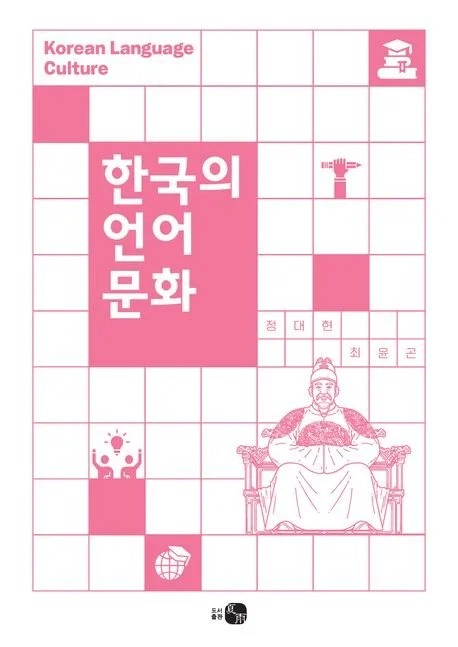 Image 2 of 2
한국의 언어문화 Korean Language Culture


<KR>
본 교재는 외국인 유학생들이 한국 대학 및 대학원 과정에서 요구되는 학문적 성취를 달성하기 위해 필요한 한국어 의사소통 능력을 체계적으로 향상시키기 위한 ‘학업 목적 한국어 교재’로 개발되었다. 유학생 수가 증가함에 따라, 학문적 한국어 학습자를 위한 특화된 교재의 개발 필요성이 커지고 있다. 이에 본 교재는 기존의 일반 한국어 교재와 차별화되어, 학문적 주제를 다루는 데 필수적인 전문 어휘와 표현을 체계적으로 제시하고, 유학생들이 한국 대학의 수업에서 주체적으로 참여할 수 있도록 지원한다.
또한, 단순히 이론적인 학습에 그치지 않고 실제 학업 환경에서 요구되는 사고력과 논리적 표현 능력을 배양할 수 있도록 다양한 예시와 실습 활동을 포함하여, 학문적 대화에서 자신감 있게 소통할 수 있도록 돕는다.
특히, 이 교재는 유학생들이 한국의 대학과 대학원에서 성공적으로 학업과 연구에 적응할 수 있도록 실질적인 가이드를 제공하며, 학문적 사고력과 논리적 의사소통 능력을 종합적으로 향상시킬 수 있는 체계적인 학습을 목표로 개발되었다. 이를 통해 유학생들이 한국 내에서 성공적인 유학 생활을 할 수 있도록 지원하는 것을 목표로 하고 있다.
〈한국의 언어문화〉는 다음과 같은 방식으로 유학생들의 한국 언어문화 학습을 효과적으로 도울 수 있다.
첫째, 각 강의 ‘실제 상황 읽기’ 섹션은 유학생들이 실제 한국 생활에서 마주할 수 있는 상황을 제시함으로써 실제적인 맥락에서 언어와 문화를 학습할 수 있게 한다.
둘째, ‘이야기해 봅시다’ 섹션의 질문들은 학생들이 자신의 문화와 한국 문화를 비교 분석함으로써 자문화와 타문화에 대한 흥미를 높이고 문화적 감수성을 높이는 데 도움을 준다.
셋째, ‘읽어 봅시다’ 섹션은 특정 주제에 대한 깊이 있는 설명을 제공하여 학생들이 한국 문화의 세부적인 측면을 이해할 수 있게 한다.
넷째, ‘어휘 및 표현 이해하기’ 섹션은 주제와 관련된 중요 어휘와 표현을 학습하고 실제로 활용해볼 수 있게 하여 학생들의 한국어 능력 향상에 직접적으로 기여한다.
다섯째, ‘내용 확인하기’ 섹션을 통해 학생들은 학습한 내용을 얼마나 잘 이해했는지 스스로 점검할 수 있어 효과적인 자기 주도 학습이 가능하다.
여섯째, ‘활동’ 섹션에는 매 강의 주요 내용을 소화하고 적용할 수 있는 활동을 다양하게 설계하여서 사회언어적 능력, 문화적 감수성을 높일 수 있도록 기획하였다.
마지막으로, 26강의 구성은 한국 문화와 언어의 다양한 측면을 포괄하는 광범위한 주제들을 다룬다. 이는 몸짓 언어, 존댓말 사용, 한국의 교육 문화, 직장 예절, 명절 풍습, 음식 문화, 대중문화, 역사적 사건, 사회 이슈 등을 포함한다. 이러한 다양한 화제와 내용으로 구성된 교재의 특징은 유학생들이 한국 사회의 다층적인 면모를 종합적으로 이해하고, 실제 생활에서 마주치는 다양한 상황에 적절히 대응할 수 있는 능력을 기르게 한다. 또한, 이러한 폭넓은 주제 선정은 학습자의 관심을 지속적으로 유지하며, 한국 문화에 대한 깊이 있는 통찰력을 발달시킬 수 있게 한다.
이러한 특징들을 통해 〈한국의 언어문화〉는 유학생들이 한국어 능력을 향상시키는 동시에 한국 문화에 대한 깊이 있는 이해와 적응 능력을 개발할 수 있도록 돕는다. 이 교재는 언어적 지식과 문화적 이해를 통합적으로 제공함으로써, 유학생들이 한국에서의 학업과 일상생활에서 성공적으로 소통하고 적응할 수 있는 기반을 마련해준다.
<ENG>
This textbook was developed as a 'Korean textbook for academic purposes' to systematically improve foreign students' Korean communication skills necessary to achieve the academic achievements required in Korean university and graduate school courses. As the number of international students increases, the need to develop specialized textbooks for academic Korean learners is increasing. Therefore, this textbook is differentiated from the existing general Korean textbook, systematically presents professional vocabulary and expressions essential for dealing with academic topics, and supports international students to participate independently in classes at Korean universities.
In addition, it helps to communicate confidently in academic conversations, including various examples and practical activities, so that thinking and logical expression skills required in a real academic environment can be cultivated, not just theoretical learning.
In particular, this textbook provides a practical guide for international students to successfully adapt to their studies and research in Korean universities and graduate schools, and was developed with the aim of systematic learning that can comprehensively improve academic thinking and logical communication skills. Through this, it aims to support international students to successfully study abroad in Korea.
"Korean Language Culture" can effectively help international students learn Korean language culture in the following ways.
First, each lecture's 'reading actual situations' section allows international students to learn language and culture in a practical context by presenting situations they may encounter in real Korean life.
Second, the questions in the "Let's Talk" section help students increase their interest in self-culture and other cultures and increase cultural sensitivity by comparing and analyzing their own culture and Korean culture.
Third, the 'Let's read' section provides in-depth descriptions of specific topics so that students can understand detailed aspects of Korean culture.
Fourth, the 'Understanding Vocabulary and Expression' section directly contributes to improving students' Korean language skills by allowing them to learn and use important vocabulary and expressions related to the subject.
Fifth, through the "Check Content" section, students can check on themselves how well they understand what they have learned, enabling effective self-directed learning.
Sixth, in the "Activities" section, various activities that can digest and apply the main contents of each lecture are designed to increase socio-linguistic ability and cultural sensitivity.
Finally, the composition of the 26th lecture covers a wide range of topics that cover various aspects of Korean culture and language. It includes body language, the use of honorifics, Korean educational culture, workplace etiquette, holiday customs, food culture, popular culture, historical events, and social issues. The characteristics of these textbooks consisting of various topics and contents enable international students to comprehensively understand the multi-layered aspects of Korean society and develop their ability to respond appropriately to various situations they encounter in real life. In addition, this broad selection of topics allows them to develop in-depth insights into Korean culture while continuing to maintain learners' interest.
Through these characteristics, "Korean Language Culture" helps international students develop in-depth understanding and adaptation skills to Korean culture while also improving their Korean language skills. This textbook provides a foundation for international students to successfully communicate and adapt to their studies and daily lives in Korea by providing an integrated linguistic knowledge and cultural understanding.
<FR>
Ce manuel a été élaboré en tant que « manuel coréen à des fins académiques » afin d'améliorer systématiquement les compétences de communication des étudiants étrangers nécessaires à l'obtention des résultats scolaires requis dans les universités et les écoles supérieures coréennes. À mesure que le nombre d'étudiants internationaux augmente, la nécessité d'élaborer des manuels spécialisés pour les apprenants universitaires coréens augmente. Par conséquent, ce manuel se distingue du manuel général coréen existant, présente systématiquement un vocabulaire et des expressions professionnels essentiels pour traiter des sujets académiques et aide les étudiants internationaux à suivre des cours indépendants dans les universités coréennes.
De plus, il aide à communiquer avec confiance dans les conversations académiques, y compris divers exemples et activités pratiques, afin de développer les capacités de réflexion et d'expression logique requises dans un environnement académique réel, et non seulement l'apprentissage théorique.
Ce manuel fournit notamment un guide pratique aux étudiants internationaux pour qu'ils puissent s'adapter à leurs études et recherches dans les universités et les écoles supérieures coréennes. Par ce biais, il vise à aider les étudiants internationaux à réussir leurs études à l'étranger en Corée.
La « culture de la langue coréenne » peut aider efficacement les étudiants internationaux à apprendre la culture de la langue coréenne de la façon suivante.
Premièrement, la section « situations réelles de lecture » de chaque conférence permet aux étudiants internationaux d'apprendre la langue et la culture dans un contexte pratique en présentant les situations qu'ils peuvent rencontrer dans la vraie vie coréenne.
Deuxièmement, les questions de la section « Parlons » aident les élèves à s'intéresser davantage à l'auto-culture et à d'autres cultures et à accroître leur sensibilité culturelle en comparant et en analysant leur propre culture et la culture coréenne.
Troisièmement, la section «Lisons» donne une description approfondie de sujets spécifiques afin que les élèves puissent comprendre les aspects détaillés de la culture coréenne.
Quatrièmement, la section « Comprendre le vocabulaire et l'expression » contribue directement à améliorer les compétences des élèves en coréen en leur permettant d'apprendre et d'utiliser un vocabulaire et des expressions importants liés au sujet.
Cinquièmement, grâce à la section « Vérifier le contenu », les élèves peuvent vérifier eux-mêmes s'ils comprennent bien ce qu'ils ont appris, ce qui leur permet d'apprendre par eux-mêmes.
Sixièmement, dans la section « Activités », diverses activités qui peuvent digérer et appliquer le contenu principal de chaque conférence visent à accroître la capacité sociolinguistique et la sensibilité culturelle.
Enfin, la composition de la 26e conférence couvre un large éventail de sujets qui couvrent divers aspects de la culture et de la langue coréennes. Il comprend le langage corporel, l'utilisation d'honoraires, la culture éducative coréenne, l'étiquette du lieu de travail, les coutumes des fêtes, la culture alimentaire, la culture populaire, les événements historiques et les questions sociales. Les caractéristiques de ce texteb
목차
1강. 한국어 문화의 시대를 열다
2강. 훈민정음
3강. 몸짓 언어
4강. 손가락 언어
5강. 관용어
6강. 신체 관련 관용어
7강. 신조어
8강. 유행어
9강. 한국의 풍속화
10강. 김홍도, 신윤복
11강. 한국 근현대사의 커피
12강. 한국의 커피 나무 재배
13강. 축하 문화
14강. 한국의 기념일
15강. 공공 예절
16강. 직장 예절
17강. 계절별 음식
18강. 날씨와 음식
19강. 주거 문화
20강. 한국의 아파트
21강. 한국인의 만남
22강. 상견례
23강. 한국의 시장
24강. 남대문 시장
25강. 한국의 길 이름
26강. 세종로


