 Image 1 of 2
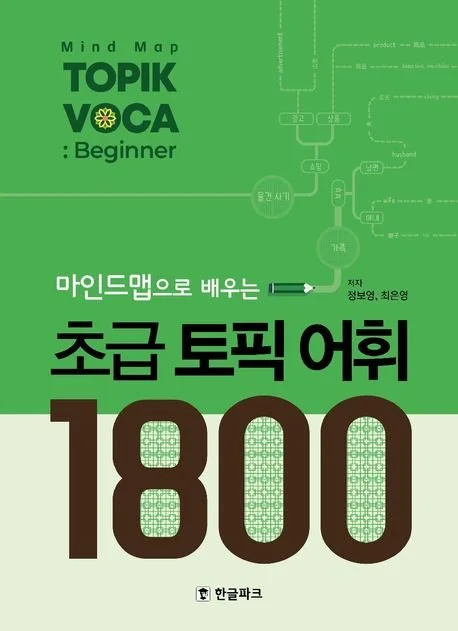 Image 2 of 2
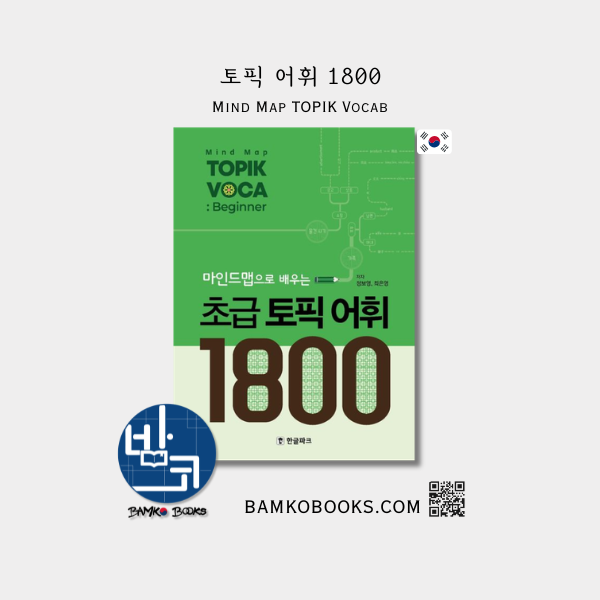
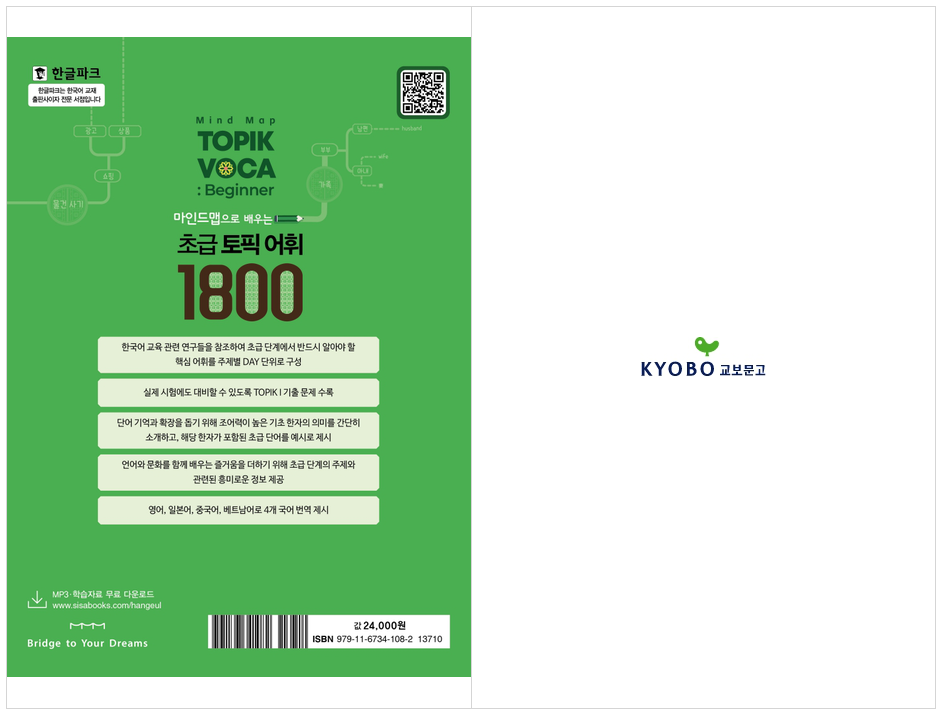
마인드맵으로 배우는 초급 토픽 어휘 1800 Mind Map Topik Vocabulary Elementary 1800


<KR>
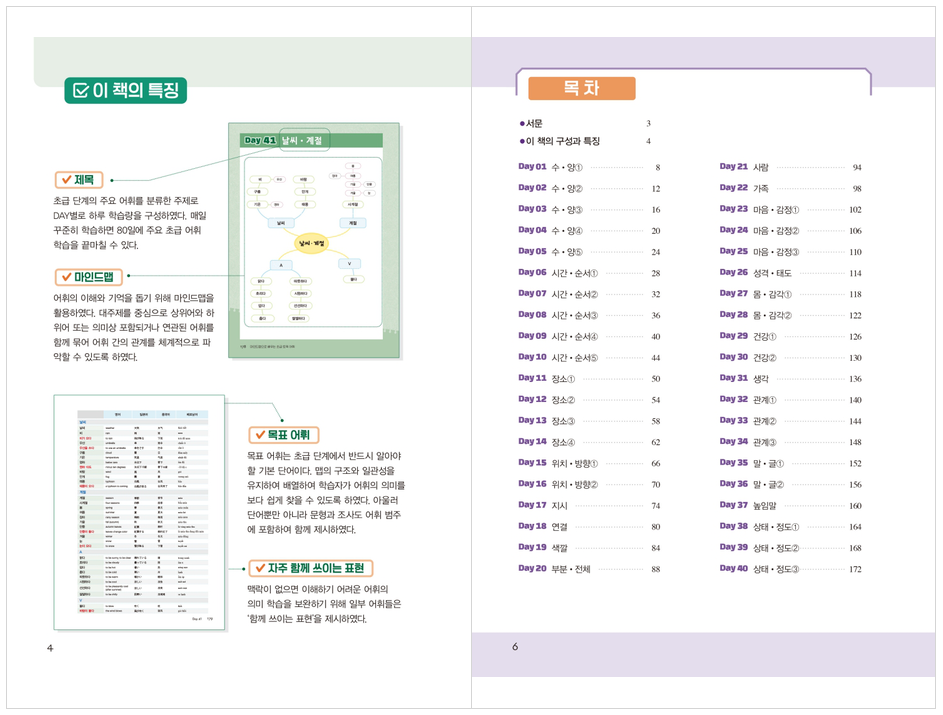
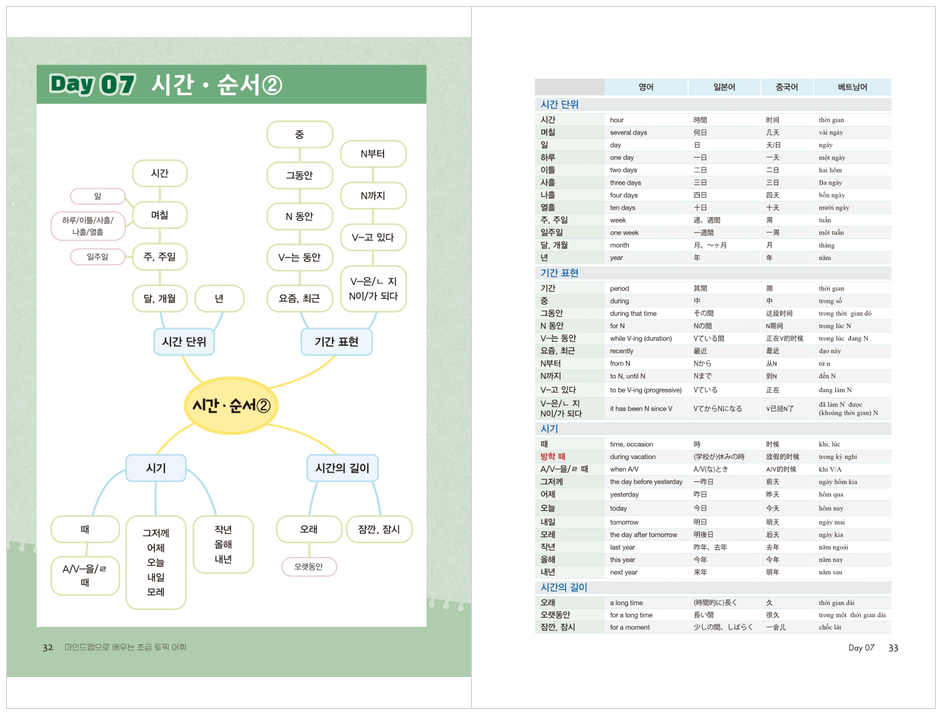
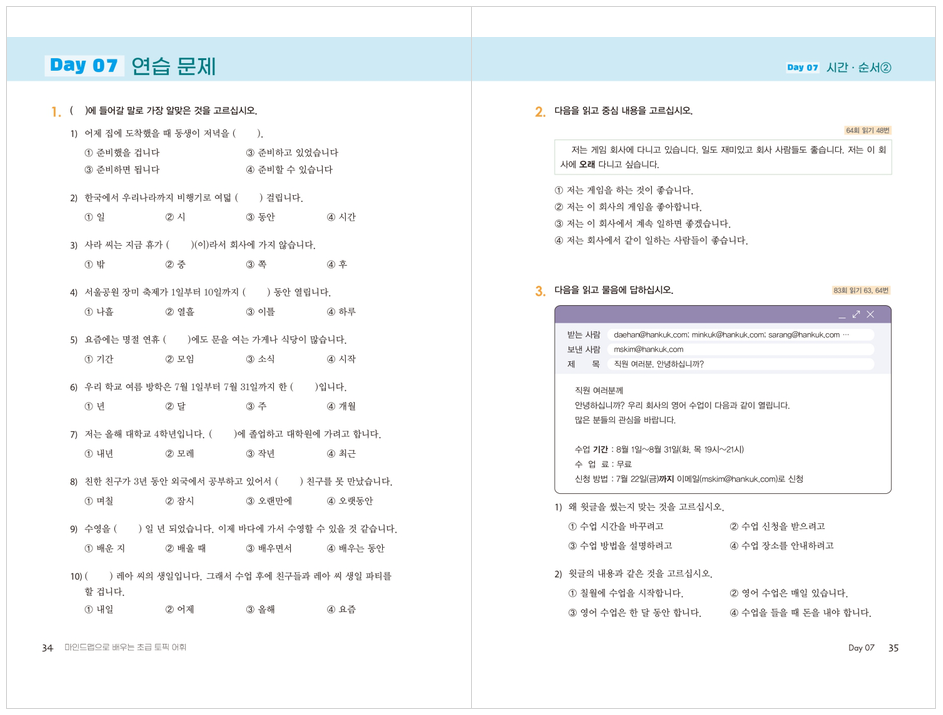
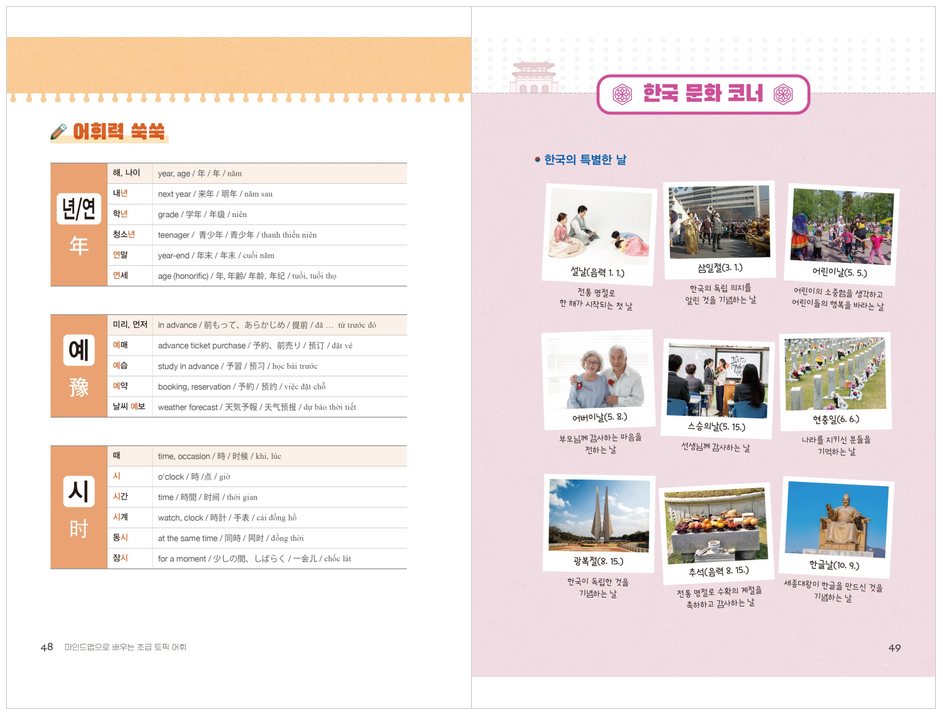
본 교재는 KSL 교육과정, 국립국어원 TOPIK 어휘 목록, 대학 교재, 한국어 학습자 사전, 관련 연구 등을 바탕으로 초급 단계에서 반드시 알아야 할 핵심 어휘를 주제별 DAY 단위로 구성하였다. 각 DAY는 먼저 마인드맵으로 의미장을 시각화하고 목표 어휘의 의미를 함께 제시하여 쓰임을 한눈에 볼 수 있게 하되, 자주 함께 쓰이는 표현으로 실제 사용 맥락을 보완하였다. 이어 연습 문제에서는 문장 완성과 대화 완성 문제를 통해 배운 어휘를 실제 상황에 적용하도록 하였고, TOPIK I 기출 문제를 수록하여 실제 시험에도 대비할 수 있게 하였다. 아울러 어휘력 쑥쑥 코너에서는 조어력이 높은 기초 한자의 의미를 간단히 소개하고, 해당 한자가 포함된 초급 단어 예시를 제시하여 단어 기억과 확장을 돕도록 하였다. 마지막으로 한국 문화 코너에서는 초급 단계의 주제와 관련된 흥미로운 정보를 제공함으로써 언어와 문화를 함께 배우는 즐거움을 더하였다.
<ENG>
Based on the KSL curriculum, the National Institute of the Korean Language's TOPIK vocabulary list, university textbooks, Korean language learners' dictionaries, and related research, this textbook is organized in units of DAY for each topic that must be known at the beginner level. Each DAY first visualizes the meaning field with a mind map and presents the meaning of the target vocabulary at a glance, but supplements the actual context of use with frequently used expressions. The vocabulary learned through the sentence completion and conversation completion problems was then applied to the actual situation in the practice question, and TOPIK I questions were included to prepare for the actual test. In addition, in the vocabulary-compromising section, the meaning of basic Chinese characters with high articulation power was briefly introduced, and examples of beginner words containing the corresponding Chinese characters were presented to help remember and expand words. Finally, in the Korean culture section, interesting information related to the topic of the beginner level was provided, adding to the joy of learning language and culture together.
<FR>
Sur la base du programme KSL, de la liste de vocabulaire TOPIK de l'Institut national de la langue coréenne, des manuels universitaires, des dictionnaires des apprenants de langue coréenne et des recherches connexes, ce manuel est organisé en unités de DAY pour chaque sujet qui doit être connu au niveau débutant. Chaque jour visualise d'abord le champ de signification à l'aide d'une carte mentale et présente d'un coup d'œil la signification du vocabulaire cible, mais complète le contexte réel d'utilisation avec des expressions fréquemment utilisées. Le vocabulaire appris par les problèmes de fin de phrase et de conversation a ensuite été appliqué à la situation réelle de la question de pratique, et les questions TOPIK I ont été incluses pour se préparer au test réel. De plus, dans la section compromettante du vocabulaire, la signification des caractères chinois de base à forte puissance d'articulation a été brièvement présentée, et des exemples de mots débutants contenant les caractères chinois correspondants ont été présentés pour aider à mémoriser et à élargir les mots. Enfin, dans la section culture coréenne, des informations intéressantes sur le thème du niveau débutant ont été fournies, ce qui a ajouté à la joie d'apprendre ensemble la langue et la culture.
목차
- 서문
- 이 책의 구성과 특징
Day 01 수ㆍ양①
Day 02 수ㆍ양②
Day 03 수ㆍ양③
Day 04 수ㆍ양④
Day 05 수ㆍ양⑤
Day 06 시간ㆍ순서①
Day 07 시간ㆍ순서②
Day 08 시간ㆍ순서③
Day 09 시간ㆍ순서④
Day 10 시간ㆍ순서⑤
Day 11 장소①
Day 12 장소②
Day 13 장소③
Day 14 장소④
Day 15 위치ㆍ방향①
Day 16 위치ㆍ방향②
Day 17 지시
Day 18 연결
Day 19 색깔
Day 20 부분ㆍ전체
Day 21 사람
Day 22 가족
Day 23 마음ㆍ감정①
Day 24 마음ㆍ감정②
Day 25 마음ㆍ감정③
Day 26 성격ㆍ태도
Day 27 몸ㆍ감각①
Day 28 몸ㆍ감각②
Day 29 건강①
Day 30 건강②
Day 31 생각
Day 32 관계①
Day 33 관계②
Day 34 관계③
Day 35 말ㆍ글①
Day 36 말ㆍ글②
Day 37 높임말
Day 38 상태ㆍ정도①
Day 39 상태ㆍ정도②
Day 40 상태ㆍ정도③
Day 41 날씨ㆍ계절
Day 42 자연
Day 43 동물
Day 44 여가 생활①
Day 45 여가 생활②
Day 46 여가 생활③
Day 47 여행
Day 48 한국
Day 49 돈
Day 50 물건 사기
Day 51 교통①
Day 52 교통②
Day 53 음식①
Day 54 음식②
Day 55 음식③
Day 56 음식④
Day 57 음식⑤
Day 58 음식⑥
Day 59 옷①
Day 60 옷②
Day 61 집①
Day 62 집②
Day 63 집③
Day 64 교육①
Day 65 교육②
Day 66 교육③
Day 67 일ㆍ직업①
Day 68 일ㆍ직업②
Day 69 문제ㆍ해결①
Day 70 문제ㆍ해결②
Day 71 동작①
Day 72 동작②
Day 73 동작③
Day 74 동작④
Day 75 동작⑤
Day 76 동작⑥
Day 77 비슷한 동사①
Day 78 비슷한 동사②
Day 79 같은 소리ㆍ다른 뜻①
Day 80 같은 소리ㆍ다른 뜻②
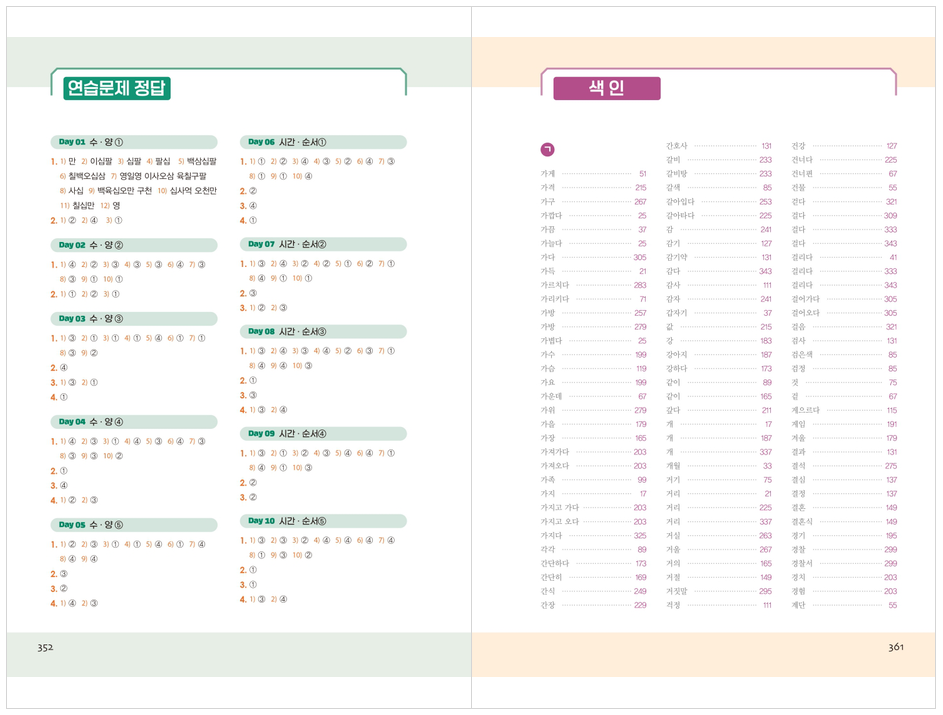
-연습 문제 정답
-색인


![경희대 경희 한국어 초급 1: 읽고 쓰기(English Version) Kyunghee Korean [Beginner 1] Reading & Writing](https://images.squarespace-cdn.com/content/v1/62f643e31145611db3fb960d/1705997783891-NAO05ZO2AA3T9WI3O3HE/9788982226458.png)


