
 Image 1 of 2
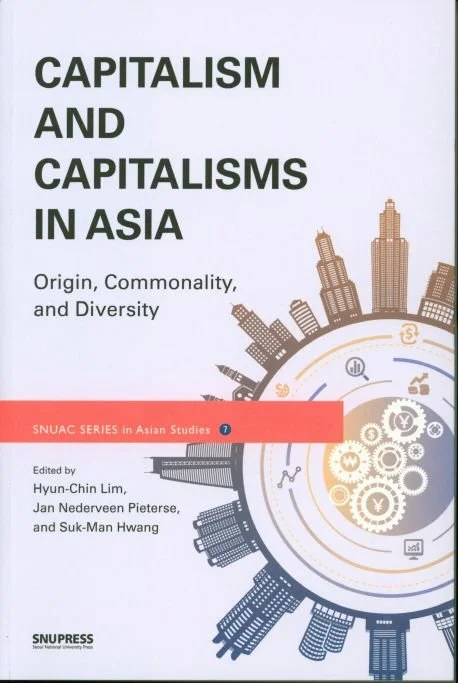 Image 2 of 2
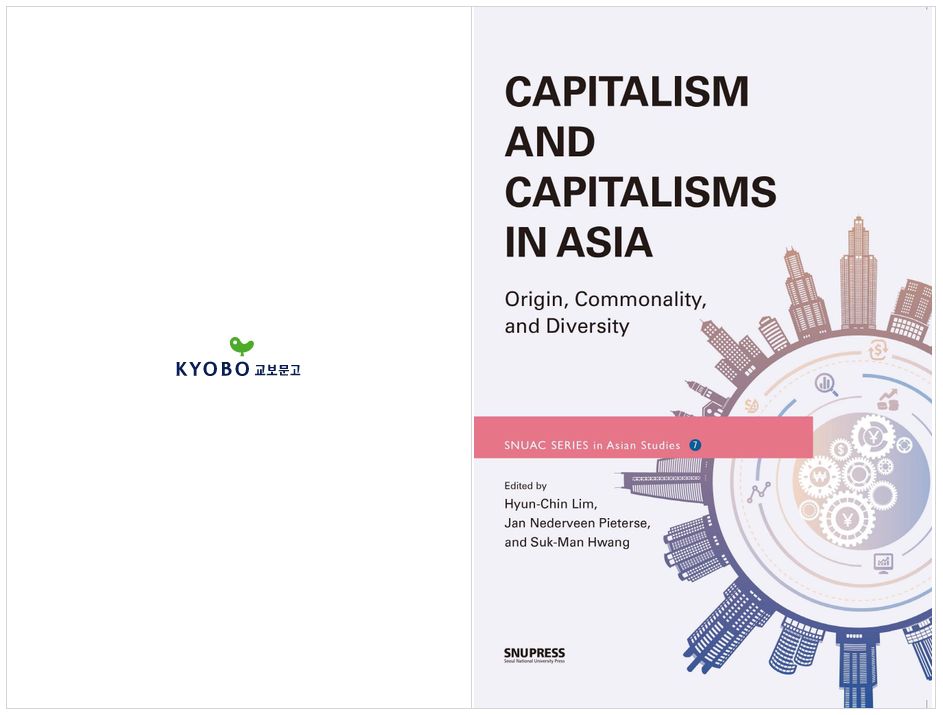
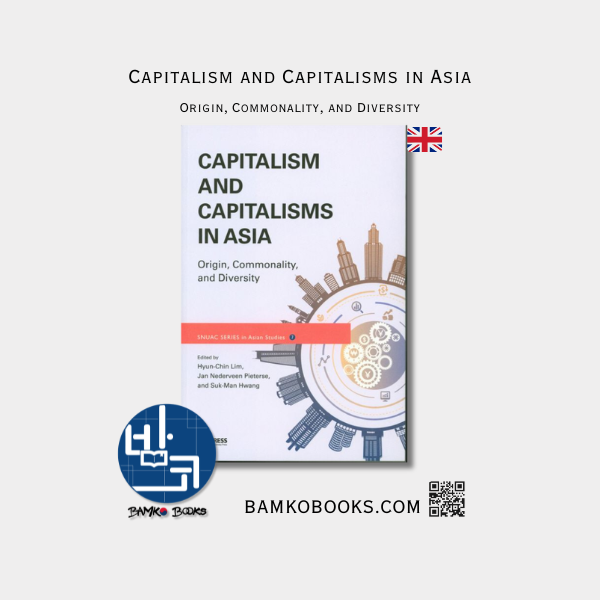
Capitalism and Capitalisms in Asia


<KR>
아시아 자본주의 모델들의 공통성과 다양성
이 책은 아시아 여러 나라의 다양한 자본주의 사례를 다루면서 두 가지 중요한 아이디어를 공유하고 있다. 첫째는 아시아 자본주의는 서구 자본주의와 형태 및 메커니즘 면에서 다르게 발전해 왔으며 서구 자본주의와 공통점을 공유한다고 할지라도 앞으로도 계속 고유한 특징을 유지할 것이라는 점, 둘째는 아시아 국가의 자본주의가 서로에게 상당히 영향을 미치지만 아시아 자본주의는 하나의 이론이나 모델로 구성하기가 매우 어렵다는 점이다.
저자들은 아시아 자본주의가 서구 자본주의 개념을 공유하면서도, 아시아 각국마다 특정한 역사적, 정치적, 사회적 상황에서 자본주의를 어떻게 발전시켰는지 분석한다. 또한 특정 수준의 자본주의 발전을 이룩한 아시아 국가들이 세계화 과정에 어떻게 반응하고 변화하고 있는지에 초점을 맞추고 있다.
제1부는 거시적 역사와 이론 논쟁의 측면에서 아시아 자본주의를 다룬다. 즉, 동아시아 자본주의 모델들의 유사성과 차이점을 거시 역사적인 근대화(modernization) 측면에서 분석하고 있다. 또한 현대 자본주의의 근본적인 문제(전 지구적 환경문제 등)와 해결 가능성을 가늠해 본다.
제2부는 현재 세계화의 흐름에서 아시아 각국 내부 제도와 체제의 변화를 중국과 인도네시아를 중심으로 분석하고 있다. 중국 자본주의의 변화를 역사적으로 추적하고 전망하며, 중국의 급격한 성공의 제도적 조건들을 분석하고 그 원인을 “제도적 적합성”(“institutional fit”) 개념으로 설명한다. 그리고 인도네시아의 정치 질서 변화와 복지국가체제의 변화를 분석한다.
제3부는 좀 더 국제적 차원에서 글로벌 네트워크와 공적개발원조(ODA, official development assistance) 등에 의해 아시아 국가들이 맺는 상호작용의 의미를 분석하고 있다. 중국 위안화의 국제화와 그 영향, 휴대전화의 글로벌가치사슬(Global Value Chain)의 변화, 그리고 한국의 ODA 사례 등을 분석하고 있다.
아시아 자본주의 체제에 대한 좀 더 면밀한 분석은 급변하는 세계 경제 및 정치적 중요성을 고려할 때 시급한 것이다. 이 필요성에 부응하여 서울대학교 아시아연구소는 아시아 자본주의에 관한 10권의 시리즈를 만들고 있으며, 여기에는 향후 5년간 아시아 및 다른 국가의 저명한 학자들이 수행한 연구가 포함될 예정이다. 이번에 출간된 〈Capitalism and Capitalisms in Asia〉는 그 첫 번째 책으로서, 이 책은 학자, 정책 입안자 및 그 밖의 많은 독자에게 아시아 자본주의의 다양한 측면과 관련된 최신 쟁점을 살펴볼 수 있는 기회를 제공할 것이다.
<ENG>
Commonality and Diversity of Asian Capitalist Models
This book shares two important ideas while addressing various cases of capitalism in many Asian countries. First, Asian capitalism has developed differently from Western capitalism in terms of form and mechanism, and even if it shares commonalities with Western capitalism, it will continue to have its own characteristics. Second, Asian capitalism is very difficult to construct into a single theory or model, despite the fact that capitalism in Asian countries significantly affects each other.
The authors analyze how Asian capitalism developed capitalism in specific historical, political, and social situations in each Asian country while sharing the concept of Western capitalism. It also focuses on how Asian countries that have achieved certain levels of capitalist development are responding and changing to the process of globalization.
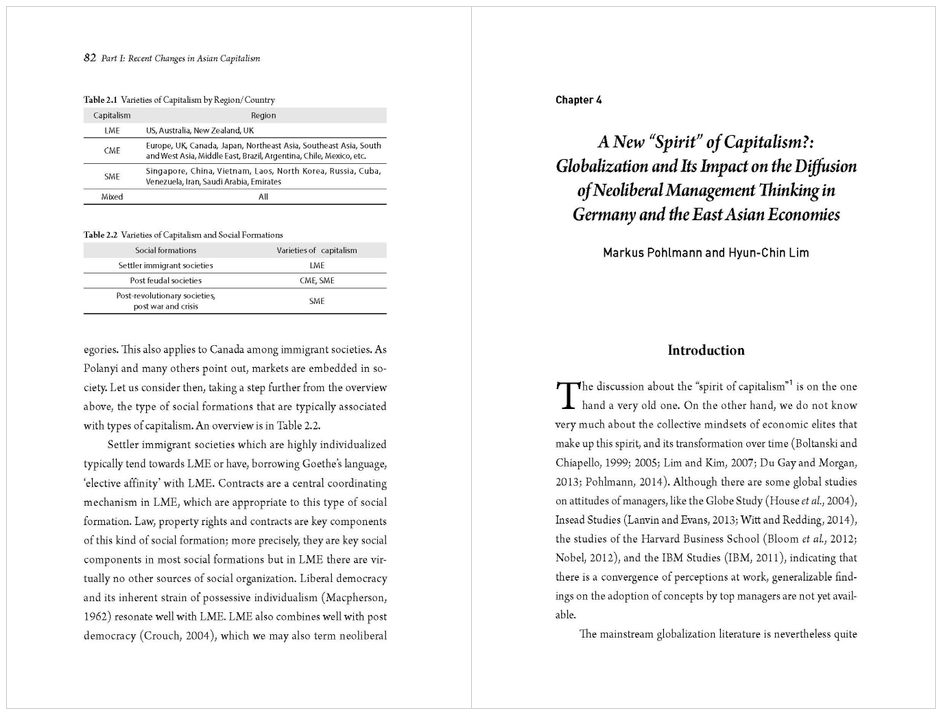
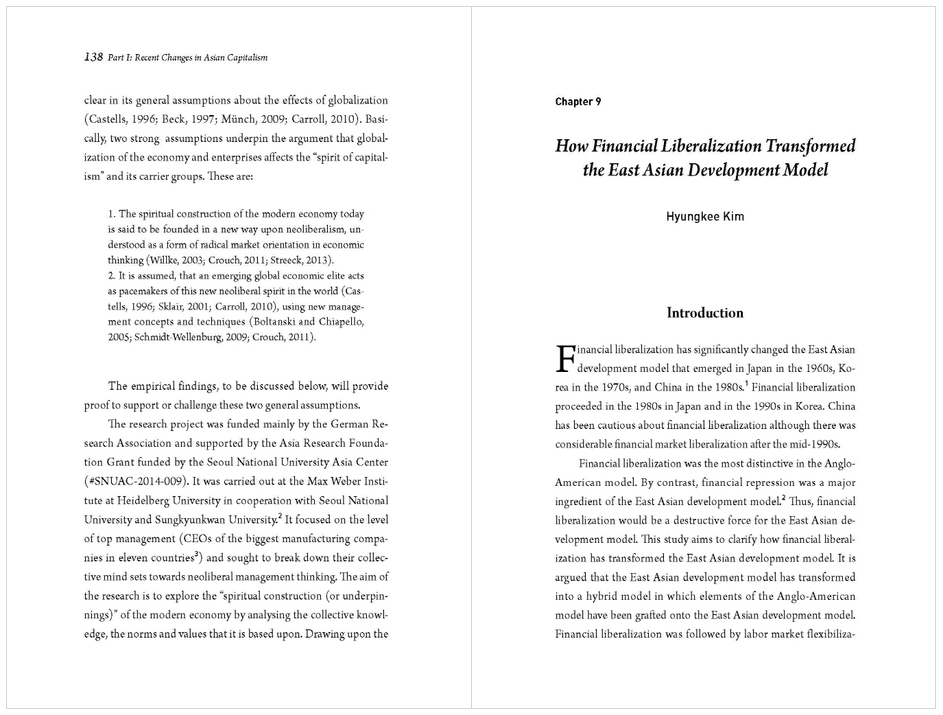
The first part deals with Asian capitalism in terms of macro-historical and theoretical debates. In other words, it analyzes the similarities and differences of East Asian capitalist models in terms of macro-historical modernization. It also assesses the fundamental problems and solutions of modern capitalism (global environmental problems, etc.).
The second part analyzes the changes in the internal systems and systems of Asian countries in the current trend of globalization, focusing on China and Indonesia. It historically tracks and predicts changes in Chinese capitalism, analyzes the institutional conditions for China's rapid success, and explains the cause in the concept of "institutional fit". It also analyzes changes in Indonesia's political order and welfare state system.
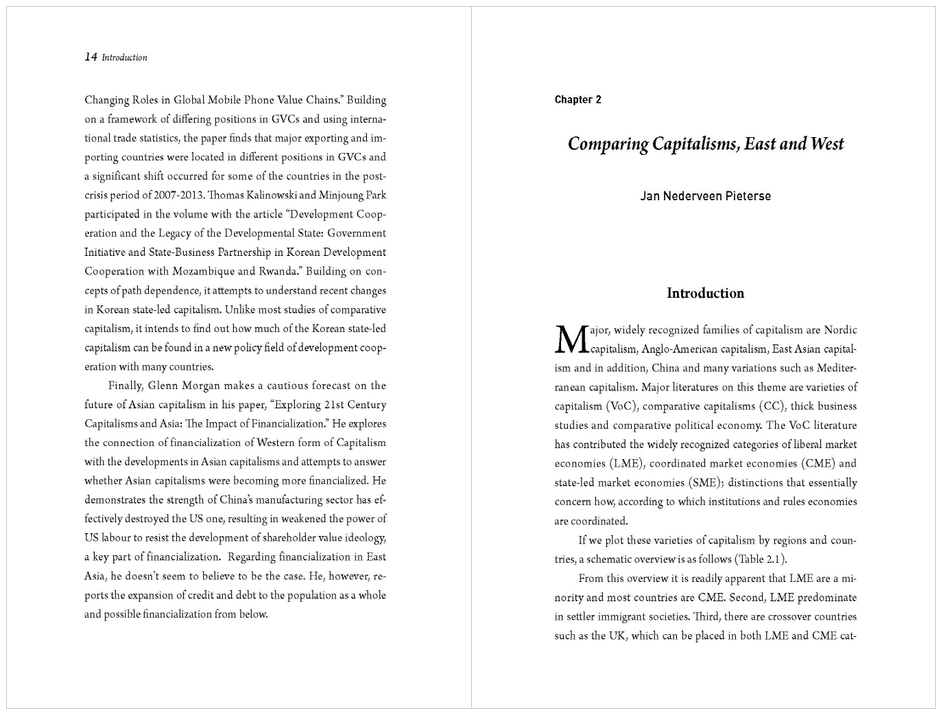
The third part analyzes the meaning of interactions between Asian countries through global networks and official development assistance (ODA) at a more international level. It analyzes the internationalization and impact of the Chinese yuan, changes in the global value chain of mobile phones, and examples of Korea's ODA.
A more detailed analysis of the Asian capitalist system is urgent given its rapidly changing global economic and political importance. In response to this need, Seoul National University's Asia Research Institute is publishing a 10-volume series on Asian capitalism, which will include research conducted by prominent scholars in Asia and other countries over the next five years. The newly published "Capitalism and Capitalisms in Asia" is the first book to provide scholars, policymakers, and many other readers with the opportunity to look at the latest issues related to various aspects of Asian capitalism.
<FR>
Communauté et diversité des modèles capitalistes asiatiques
Ce livre partage deux idées importantes tout en abordant divers cas de capitalisme dans de nombreux pays asiatiques. Premièrement, le capitalisme asiatique s'est développé différemment du capitalisme occidental en termes de forme et de mécanisme, et même s'il partage des points communs avec le capitalisme occidental, il continuera d'avoir ses propres caractéristiques. Deuxièmement, le capitalisme asiatique est très difficile à construire en une seule théorie ou modèle, malgré le fait que le capitalisme dans les pays asiatiques s'affecte de façon significative.
Les auteurs analysent comment le capitalisme asiatique a développé le capitalisme dans des situations historiques, politiques et sociales spécifiques dans chaque pays asiatique tout en partageant le concept du capitalisme occidental. Il met également l'accent sur la façon dont les pays asiatiques qui ont atteint certains niveaux de développement capitaliste réagissent et évoluent au processus de mondialisation.
La première partie traite du capitalisme asiatique en termes de débats macro-historiques et théoriques. En d'autres termes, il analyse les similitudes et les différences des modèles capitalistes d'Asie de l'Est en termes de modernisation macro-historique. Il évalue également les problèmes fondamentaux et les solutions du capitalisme moderne (problèmes environnementaux mondiaux, etc.).
La deuxième partie analyse l'évolution des systèmes internes et des systèmes des pays asiatiques dans la tendance actuelle à la mondialisation, en mettant l'accent sur la Chine et l'Indonésie. Il suit et prédit historiquement les changements du capitalisme chinois, analyse les conditions institutionnelles du succès rapide de la Chine et explique la cause dans le concept de « adéquation institutionnelle ». Il analyse également les changements dans l'ordre politique et le système d'État providence de l'Indonésie.
La troisième partie analyse la signification des interactions entre les pays asiatiques au moyen de réseaux mondiaux et d'aide publique au développement (APD) à un niveau plus international. Il analyse l'internationalisation et l'impact du yuan chinois, l'évolution de la chaîne de valeur mondiale des téléphones portables et des exemples d'APD de la Corée.
Il est urgent de procéder à une analyse plus détaillée du système capitaliste asiatique, compte tenu de l'évolution rapide de son importance économique et politique mondiale. Pour répondre à ce besoin, l'Asia Research Institute de l'Université nationale de Séoul publie une série de 10 volumes sur le capitalisme asiatique, qui comprendra des recherches menées par des chercheurs éminents en Asie et dans d'autres pays au cours des cinq prochaines années. Le nouveau livre intitulé « Capitalisme et capitalisme en Asie » est le premier à offrir aux chercheurs, aux décideurs et à de nombreux autres lecteurs l'occasion d'examiner les derniers enjeux liés à divers aspects du capitalisme asiatique.
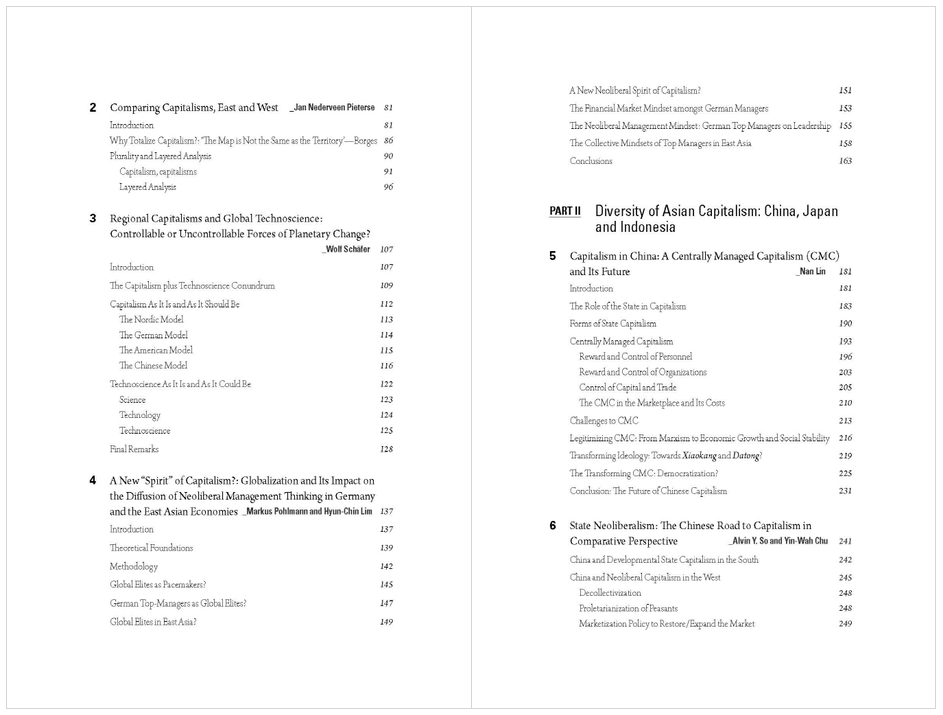
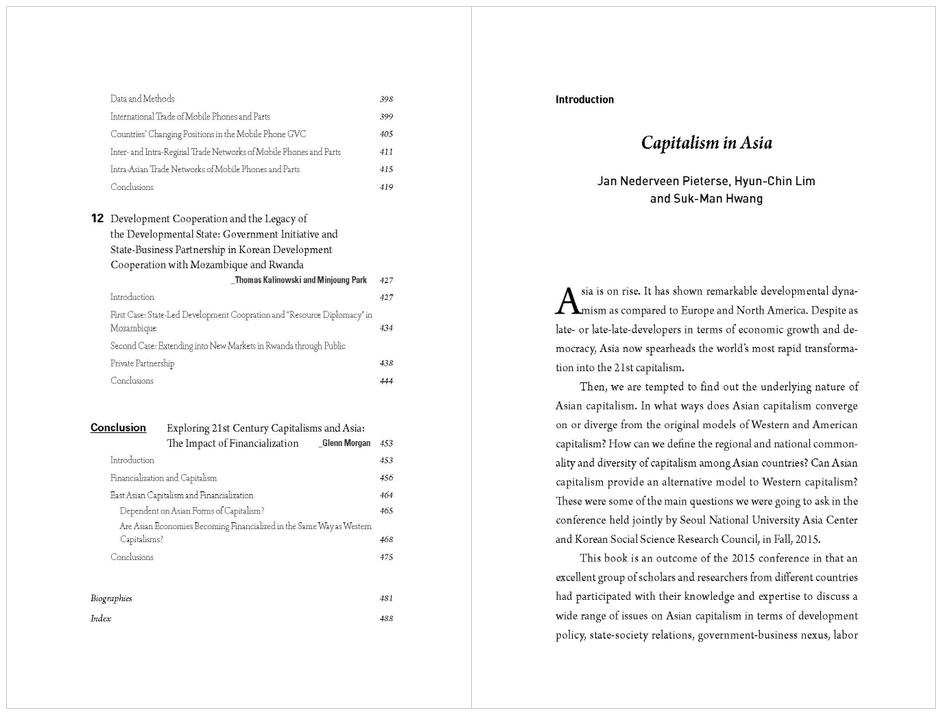
목차
Introduction; Capitalism in Asia
Theoretical Contexts and Analytical Framework
Organization of the Argument
PART I: Recent Changes in Asian Capitalism
1. Formation and Development of Capitalism in the Modernization of East Asia: An Alternative Theoretical Explication
Introduction
A Theory of Selective Modernization and Alternative Modernities: A Synopsis
The Birth of Capitalism in the First-Wave Modernization in East Asia
The Development of the Modern Capitalism in the Second-Wave Modernization in East Asia
In Closing
2. Comparing Capitalisms, East and West
Introduction
Why Totalize Capitalism?: ‘The Map is Not the Same as the Territory’?Borges
Plurality and Layered Analysis
3. Regional Capitalisms and Global Technoscience: Controllable or Uncontrollable Forces of Planetary Change?
Introduction
The Capitalism plus Technoscience Conundrum
Capitalism As It Is and As It Should Be
Technoscience As It Is and As It Could Be
Final Remarks
4. A New “Spirit” of Capitalism?: Globalization and Its Impact on the Diffusion of Neoliberal Management Thinking in Germany and the East Asian Economies
Introduction
Theoretical Foundations
Methodology
Global Elites as Pacemakers?
German Top-Managers as Global Elites?
Global Elites in East Asia?
A New Neoliberal Spirit of Capitalism?
The Financial Market Mindset amongst German Managers
The Neoliberal Management Mindset: German Top Managers on Leadership
The Collective Mindsets of Top Managers in East Asia
Conclusions
PART II Diversity of Asian Capitalism: China, Japan and Indonesia
5. Capitalism in China: A Centrally Managed Capitalism (CMC) and Its Future
Introduction
The Role of the State in Capitalism
Forms of State Capitalism
Centrally Managed Capitalism
The CMC in the Marketplace and Its Costs
Challenges to CMC
Legitimizing CMC: From Marxism to Economic Growth and Social Stability
Transforming Ideology: Towards Xiaokang and Datong?
The Transforming CMC: Democratization?
Conclusion: The Future of Chinese Capitalism
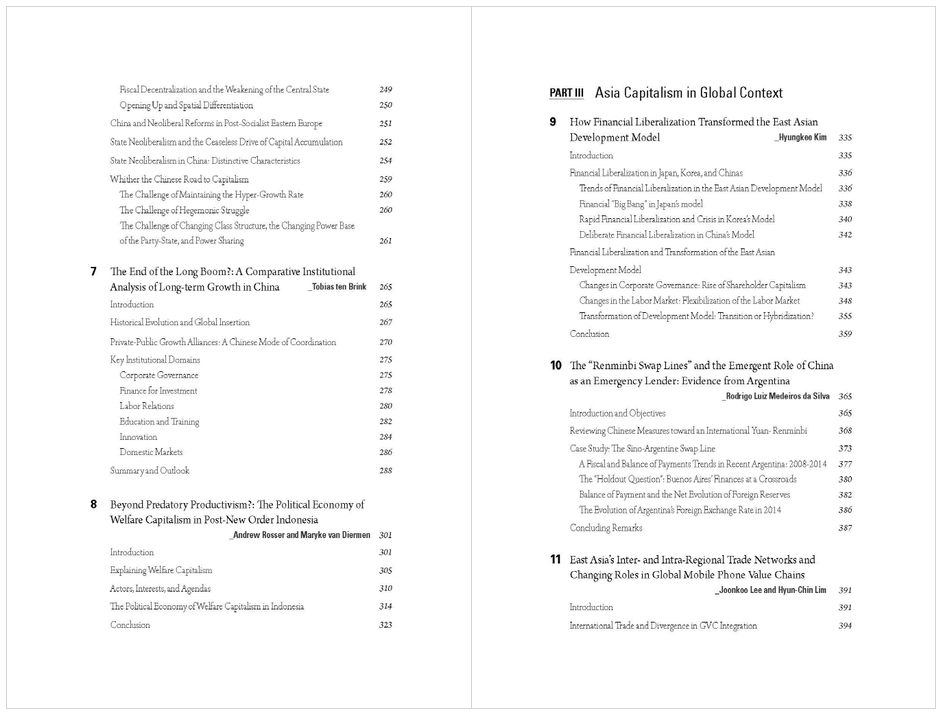
6. State Neoliberalism: The Chinese Road to Capitalism in Comparative Perspective
China and Developmental State Capitalism in the South
China and Neoliberal Capitalism in the West
China and Neoliberal Reforms in Post-Socialist Eastern Europe
State Neoliberalism and the Ceaseless Drive of Capital Accumulation
State Neoliberalism in China: Distinctive Characteristics
Whither the Chinese Road to Capitalism
7. The End of the Long Boom?: A Comparative Institutional Analysis of Long-term Growth in China
Introduction
Historical Evolution and Global Insertion
Private-Public Growth Alliances: A Chinese Mode of Coordination
Key Institutional Domains
Summary and Outlook
8. Beyond Predatory Productivism?: The Political Economy of Welfare Capitalism in Post-New Order Indonesia
Introduction
Explaining Welfare Capitalism
Actors, Interests, and Agendas
The Political Economy of Welfare Capitalism in Indonesia
Conclusion
PART III Asia Capitalism in Global Context
9. How Financial Liberalization Transformed the East Asian Development Model
Introduction
Financial Liberalization in Japan, Korea, and Chinas
Financial Liberalization and Transformation of the East Asian Development Model
Conclusion 359
10. The “Renminbi Swap Lines” and the Emergent Role of China as an Emergency Lender: Evidence from Argentina
Introduction and Objectives
Reviewing Chinese Measures toward an International Yuan-Renminbi
Case Study: The Sino-Argentine Swap Line
Concluding Remarks
11. East Asia’s Inter- and Intra-Regional Trade Networks and Changing Roles in Global Mobile Phone Value Chains
Introduction
International Trade and Divergence in GVC Integration
Data and Methods
International Trade of Mobile Phones and Parts
Countries’ Changing Positions in the Mobile Phone GVC
Inter- and Intra-Reginal Trade Networks of Mobile Phones and Parts
Intra-Asian Trade Networks of Mobile Phones and Parts
Conclusions
12. Development Cooperation and the Legacy of the Developmental State: Government Initiative and State-Business Partnership in Korean Development Cooperation with Mozambique and Rwanda
Introduction
First Case: State-Led Development Coopration and “Resource Diplomacy” in Mozambique
Second Case: Extending into New Markets in Rwanda through Public Private Partnership
Conclusions
Conclusion: Exploring 21st Century Capitalisms and Asia: The Impact of Financialization
Introduction
Financialization and Capitalism
East Asian Capitalism and Financialization
Conclusions
Biographies
Index